Say what you believe about AI in your organization.
Start with Resolve4 minutes. 9 statements. Optionally share with your organization.
Movemental Leaders
“We should resist sounding, deciding and serving like everyone else.”
Your organization is already responding to AI.
On a Tuesday night, a development officer pastes this year’s appeal into a chatbot and asks it to sound warmer. Across town, an executive pastor learns that the sermon he praised was partly drafted by a model. At a seminary, two professors teach under opposite rules, and their students have noticed.
Added together, those decisions are already a response.
No one chose it.
- 81%of nonprofits using AI use it individually, outside any shared workflow. Only 7% report major gains.Virtuous and Fundraising.AI, 2026, 346 nonprofits
- 5%of church leaders have an AI policy. 64% say one is important.Barna and Pushpay, 2026, 1,306 church leaders
- 78%of people using AI at work bring their own tools.Microsoft and LinkedIn, 2024 Work Trend Index
Every figure on this site links to its source. See all sources
Someone has to ask the human questions.
Technology companies, businesses and governments are each answering part of the question of how we live with AI. They should.
These questions belong to the rest of us, too.
- What happens to presence?
- What does responsible care look like when machines can imitate attention?
- What happens to vocation?
- Which work should stay a person’s, even when a machine is faster?
- What becomes of the people with the least power?
- Who receives the time that AI gives back?
Resolve
Say, in writing, what you believe your organization should do as AI changes its work.
Across nine themes, mark the statements you agree with and identify the ones that matter most to you.
Your Resolution belongs to you. It stays private unless you choose to share it.
About four minutes. No account. It isn’t a policy, a score or a vote. It is what you believe.
Presence, the first of nine themes
Where must a person always be present in our work?
Resolved, that our organization should…
Mark a statement and it is written here.
Eight more themes follow: voice, truth, thinking, learning, time, risk, people and leading.
When several people resolve, you can see where you agree.
Agreement becomes a starting point. Difference becomes an agenda.
Neither becomes policy until the people responsible for deciding have decided.
Each Resolution stays private unless its author shares it. An organization sees only counts, drawn from what participants have chosen to contribute.
Most of the team resolved that we should
- say plainly how AI is used here, including by our leaders.8 of 9
- keep the moments of care human.7 of 9
- form our own views before we ask AI for one.6 of 9
The team is divided on whether we should
- give the time AI saves back to people, to creation and to play.lower our costs first, so more reaches the mission.4 of 95 of 9
Respond
Resolving takes minutes and belongs to each person. Responding takes months and belongs to the organization.
The Map helps leaders turn convictions into legitimate decisions, prepare their institutional knowledge, form their people, and build the systems that actually belong.
Each stage leaves the organization with something it can keep.
Stage 1. Decide what you will stand for
Establish the convictions, responsibilities and boundaries that will guide your organization’s use of AI.
From a church’s AI Charter
AI may carry the administrative weight of ministry. It may not stand in for a person where presence is the point.
Signed by the lead pastorRatified by the boardStage 2. Gather what should ground the work
Bring together the documents, knowledge, workflows and relationships that AI may responsibly work from, within the boundaries your organization has established.
What an AI system may know
- Sermon and teaching archiveGathered
- Membership pathwayMapped
- Pastoral care and prayer requestsExcluded by the Charter
Stage 3. Practice the judgment your people will need
Help staff and leaders develop the habits, shared understanding and practical discernment required to use AI well.
AI for Church Teams · week 3 of 8
- Guided learningA short lesson on drafting with AI, 30 minutes on your own
- PracticeDraft next Sunday’s announcements with the church’s assistant
- DiscussionNinety minutes together: what felt like ours, and what didn’t
- Human reviewA staff member signs off before anything is sent
Stage 4. Build only what belongs
Develop AI-enabled tools, interfaces and workflows where they serve a legitimate need and fit your organization’s commitments.
Grace Street Church · workspaceConcept- Assistant
- Research
- Library
- Workflows
What have we taught about Sabbath in the last five years?
Three sermon series and one Lent guide return to Sabbath as resistance to hurry, most fully in the 2023 series on rest.
Sermon, March 2023Lent guide, 2024+2 sourcesFor: teaching team · Draws only on what the Charter allows
Stage 5. Review what changes
Evaluate whether your tools, practices and decisions remain appropriate as your organization and the technology evolve.
Review ledger
- Decision
- Use the assistant to research sermon archives
- Owner
- Executive pastor
- Evidence reviewed
- Six months of use, a staff check-in, two drafts flagged and corrected
- Next review
- March 2027
WORK WITH MOVEMENTAL
From conviction to working systems.
An organization can decide what it believes about AI and still struggle to put those convictions into practice.
Movemental helps bridge that distance.
We work alongside your leaders to establish a responsible approach, prepare the knowledge your organization depends on, form your people, and build the tools that serve your mission.
Where ongoing technology is needed, we develop and steward your organization’s own AI-enabled environment.
Organizational guidance
Institutional AI strategy, governance, leadership facilitation and implementation planning.
Context reconstruction
The structured gathering and organizing of fragmented documents, archives, institutional knowledge, policies and workflows.
Custom platforms and agents
Purpose-built applications and AI-enabled interfaces grounded in your organization’s sources, permissions and actual work.
Ongoing stewardship
Continued management, evaluation, improvement and adaptation as technology and organizational needs change.
Shared infrastructure. Your organization’s context, commitments and decisions.
Movemental builds on a common technical foundation, but an institution’s knowledge, responsibilities and ways of working are never interchangeable.
In practice
Another way is already being built.
Movemental works with people whose ideas and experience have shaped communities for years.
Together, we’re creating new ways to publish their work, develop useful tools, and bring what they know into the places that need it.
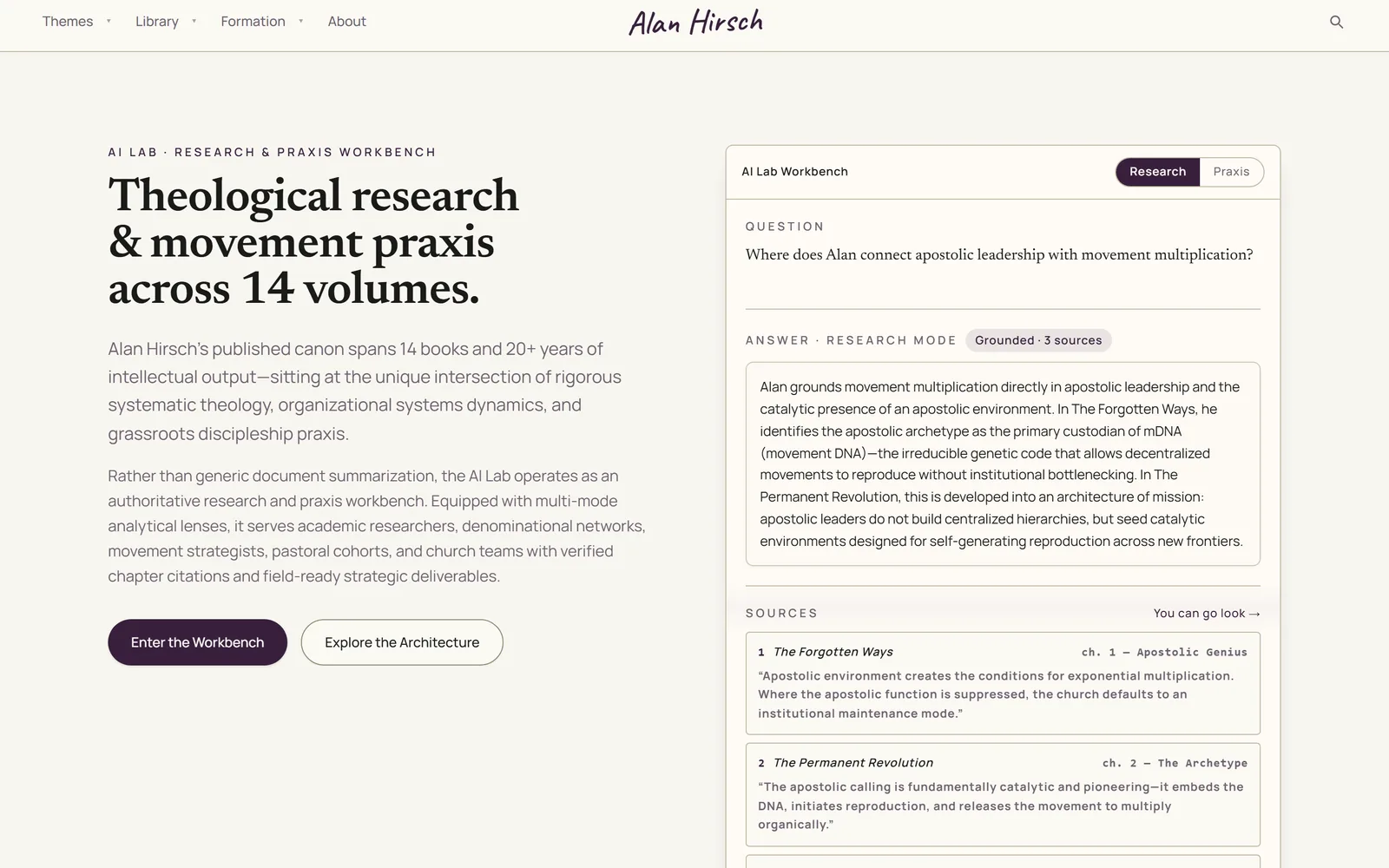
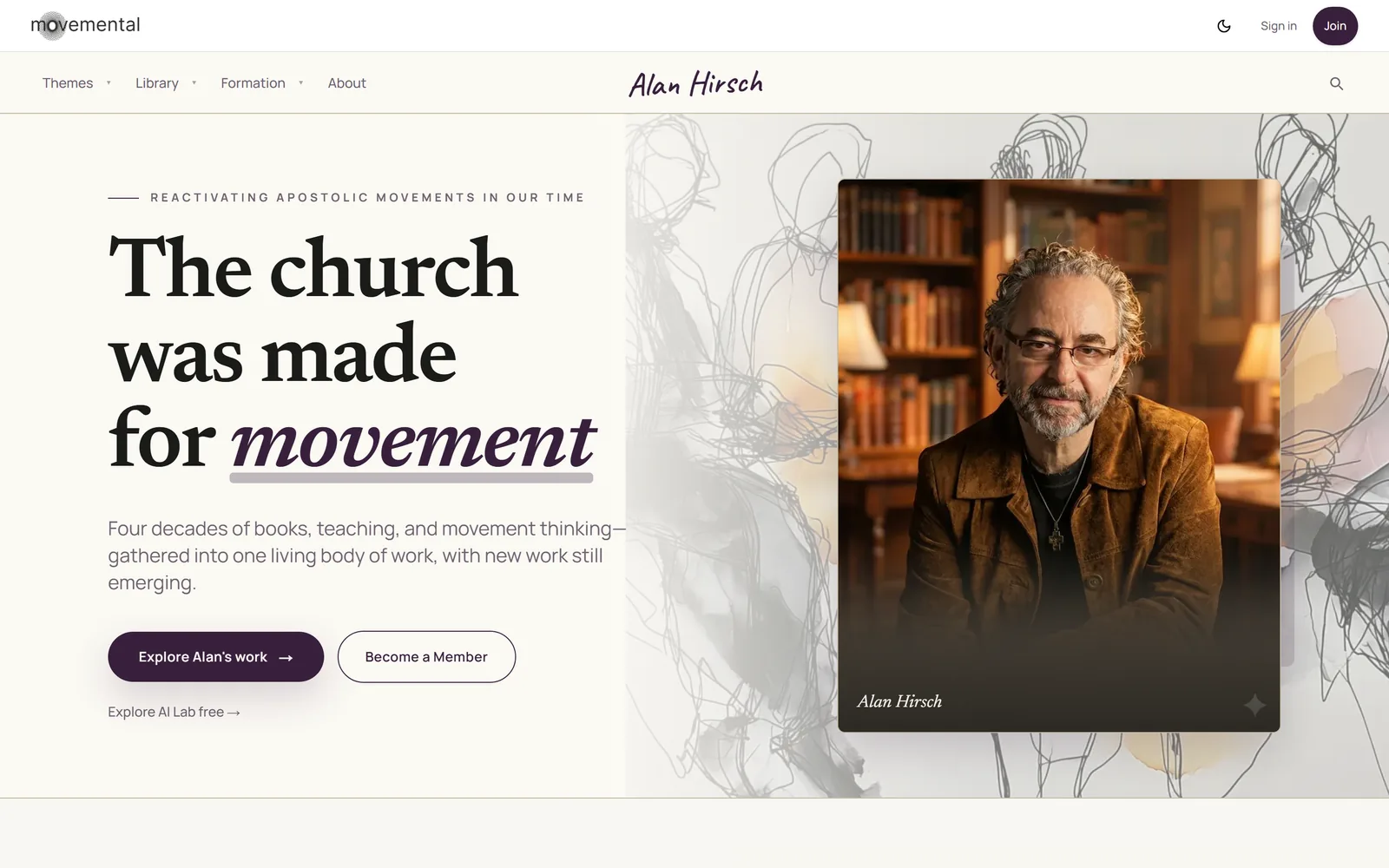
Alan Hirsch
A life’s work, still unfolding.
Books, research, teaching, courses, and developing ideas brought into one connected environment.
An author remains the author. Technology helps people engage the work without pretending to be its source.
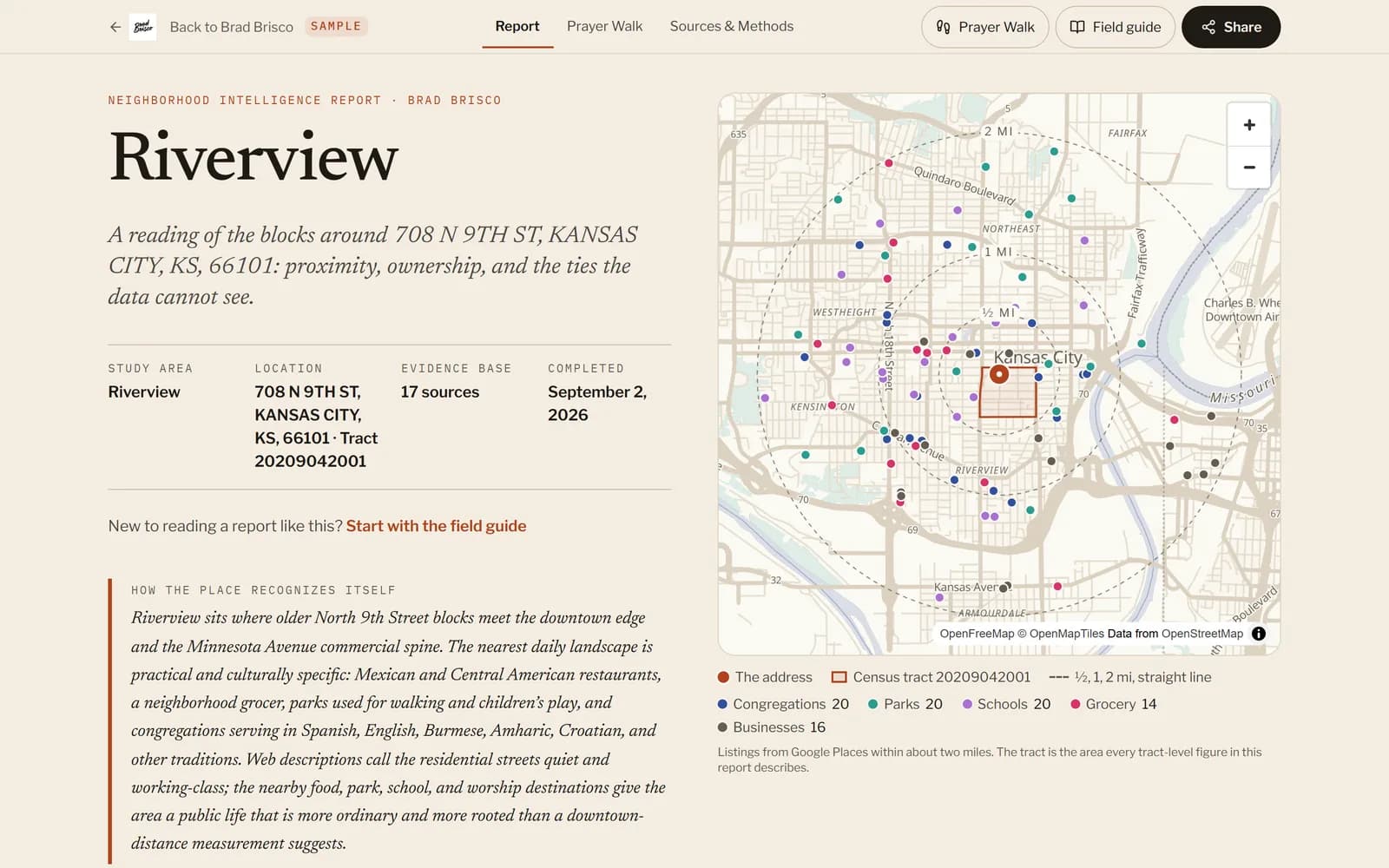
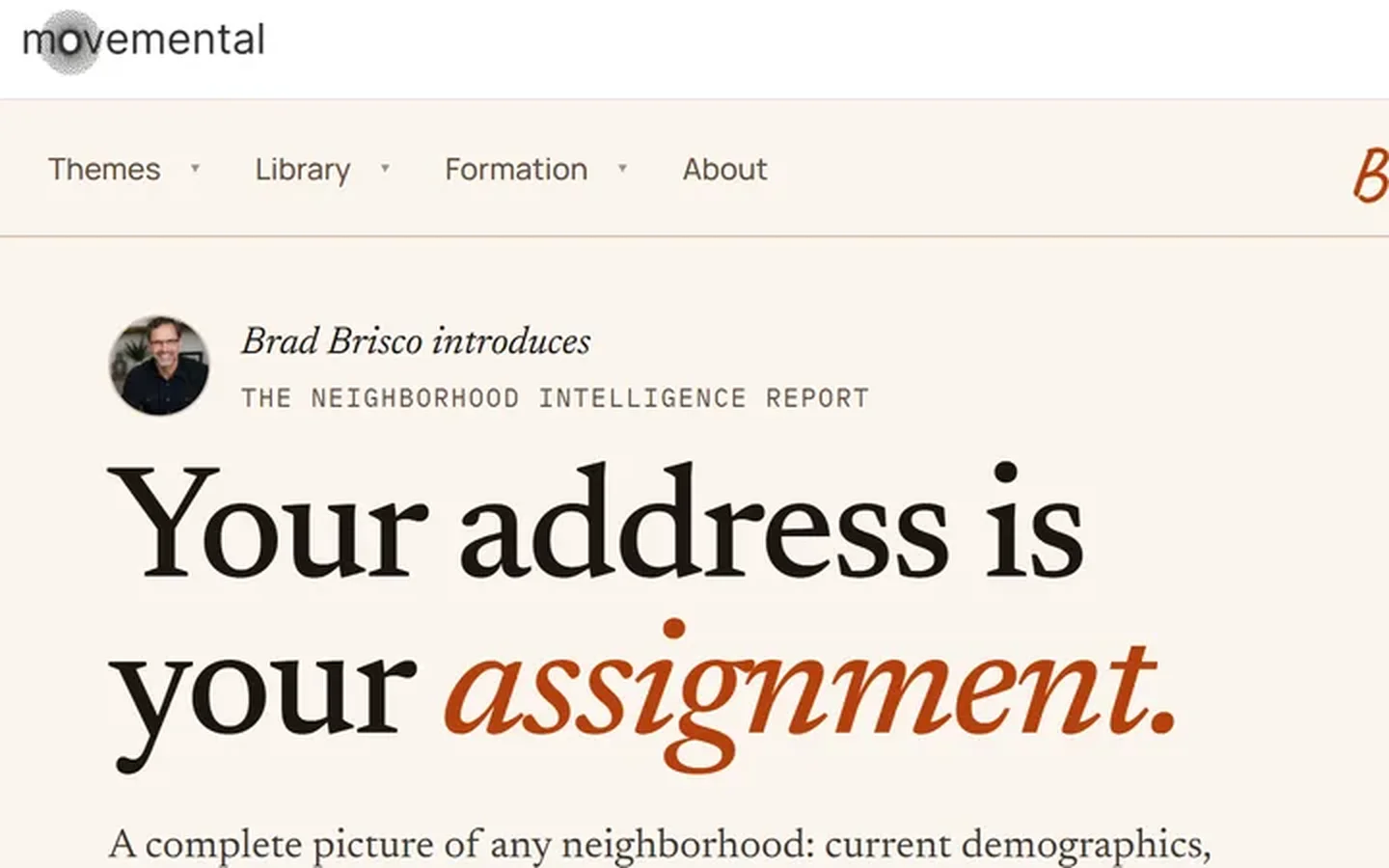
Brad Brisco
Understanding the place you’re called to serve.
Brad’s Neighborhood Intelligence experience brings research, local context, and congregational reflection together around a real place.
It helps churches ask better questions about the relationship between their congregation and their neighborhood.
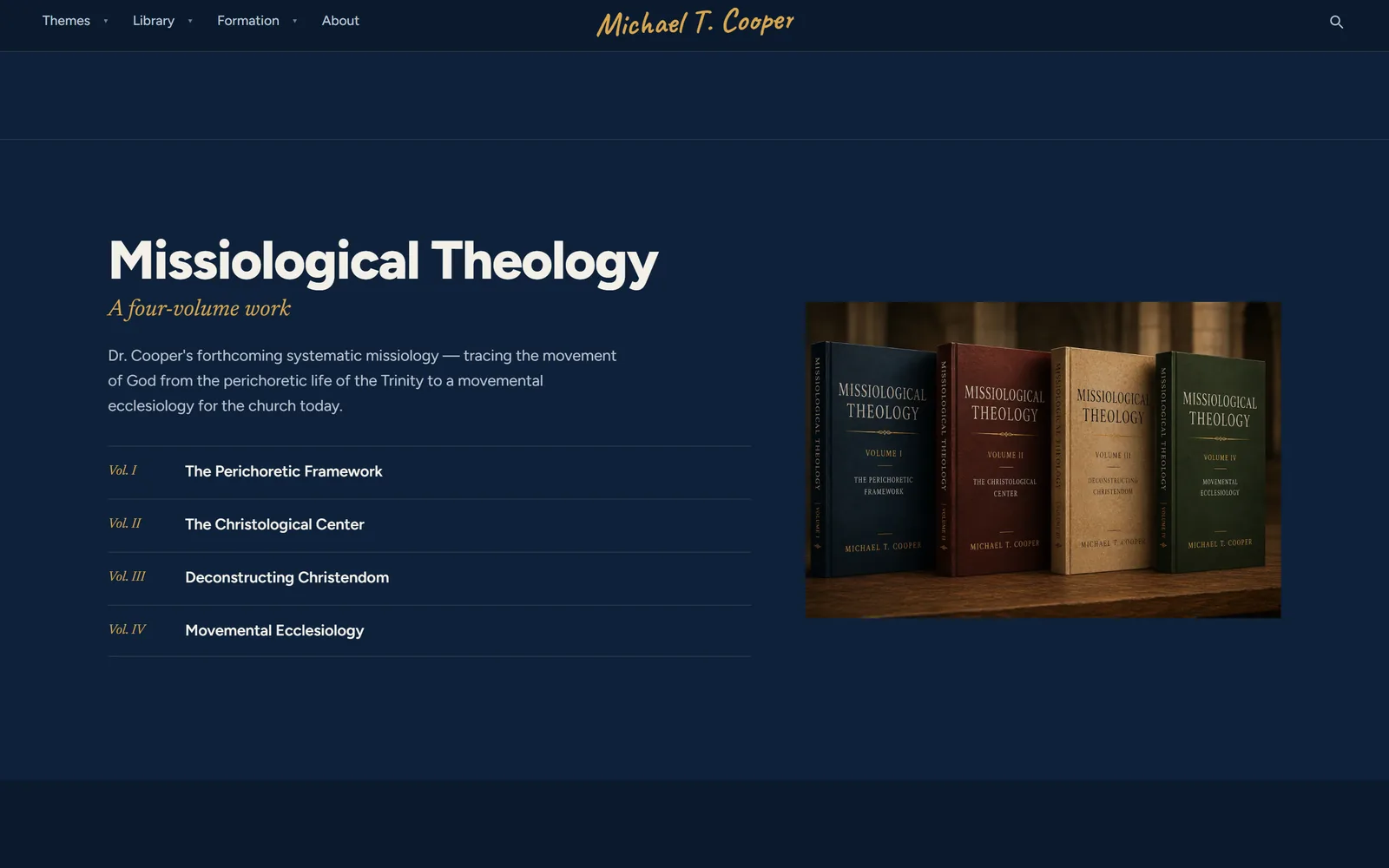
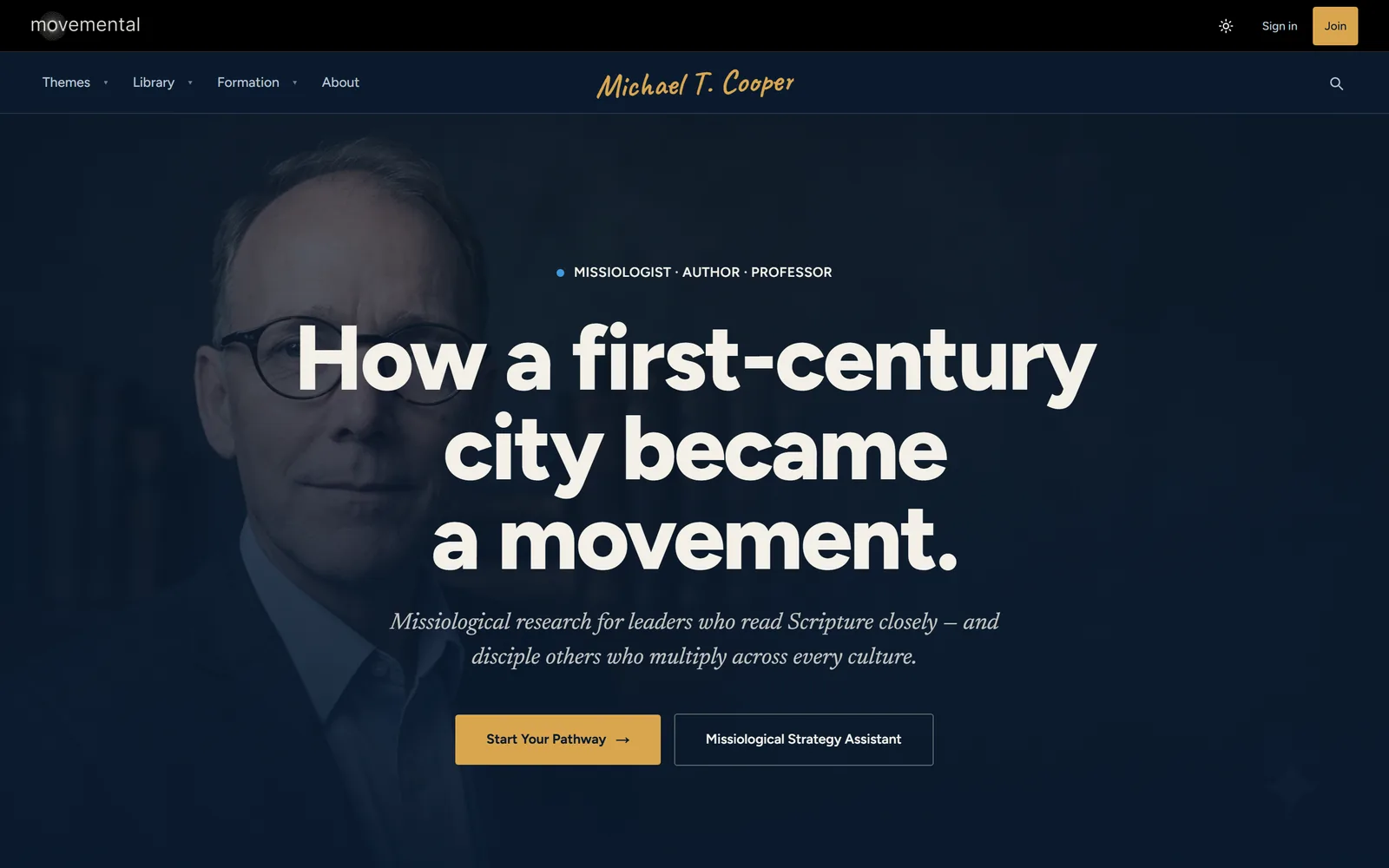
Michael Cooper
Scholarship that remains useful.
Research, writing, and leadership resources organized into a coherent environment for exploration and application.
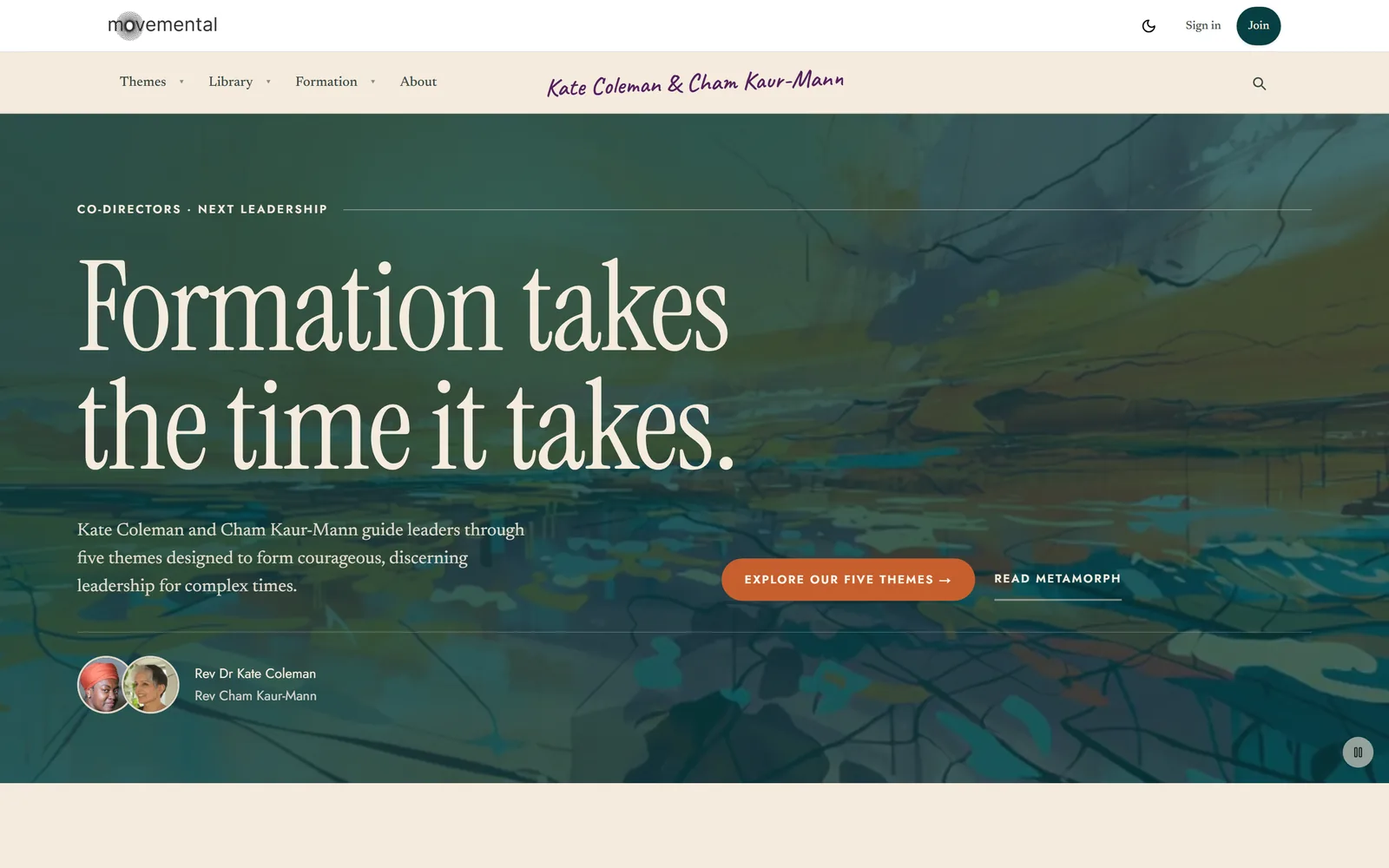
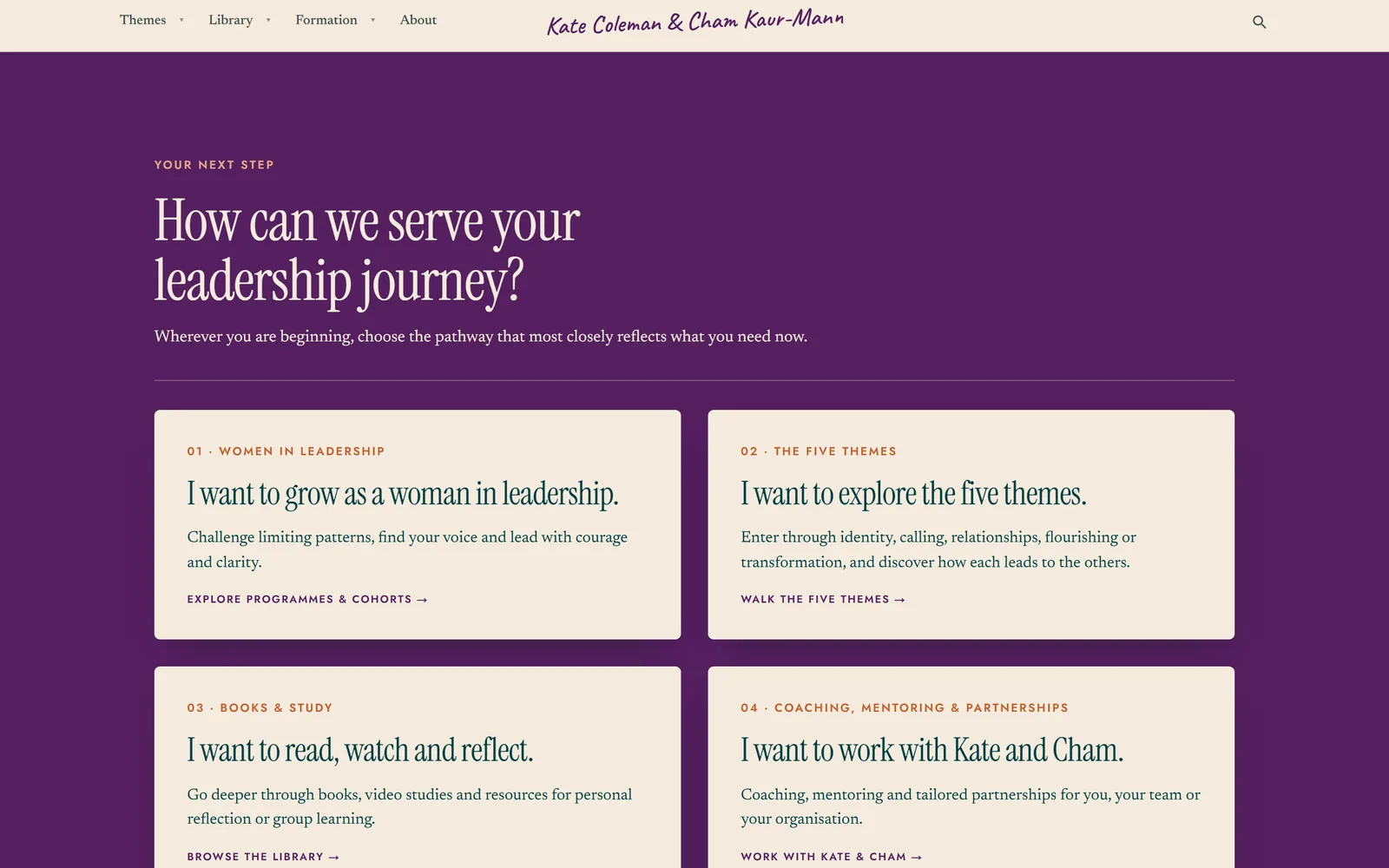
Kate Coleman and Cham Kaur-Mann
Formation that takes the time it takes.
Five themes, programmes and cohorts, and a library for reflection, arranged around where a leader is beginning.
Distinct people. Distinct purposes. Shared foundations that keep getting more capable.
No one has to work this out alone.
Alan Hirsch, Debra Hirsch, Brad Brisco, Danielle Strickland, Dhati Lewis, JR Woodward, Liz Rios, Neil Cole, Brian Sanders, Meghan Larissa Good, Hugh Halter, Dave Ferguson, Rob Wegner, Rowland Smith, Roy Moran, Peyton Jones, Michael Cooper, Lucas Pulley, and Jeremy and Monica Chambers.
A growing community of people whose work is connected to Movemental.
The most useful thing another organization can offer is its practice.
As people and organizations begin making their decisions and experience visible, others can learn what they resolved, what they tried, what worked, and what they refused to automate.
The goal isn’t a ranking of organizations or a marketplace of personalities. It’s a growing body of practical knowledge grounded in real communities.
Meet the leaders →Movemental is a company.
We say so plainly because the people we serve deserve to know what we are.
We hold one line: the call to resolve and respond should be worth making even if no one ever pays us.
The Resolution, Reality Assessment, Map and public Guidebook are free. Organizations can use the method independently.
What organizations hire Movemental to provide is the capacity to carry that method into practice: guided implementation, formation, institutional context reconstruction, purpose-built technology and continuing stewardship.
Our work grows alongside movement leaders whose knowledge and practice helped make it possible.
Read the Guidebook →Resolve. Say what you believe.
Respond. Help your organization live it.